Welcome to JPam_NEO
This is the official documentation for JPam_NEO, the new generation of timers for electric Control Line models. Here you will find detailed guides on configuration, firmware and use of the mobile app.
First, a Bit of History
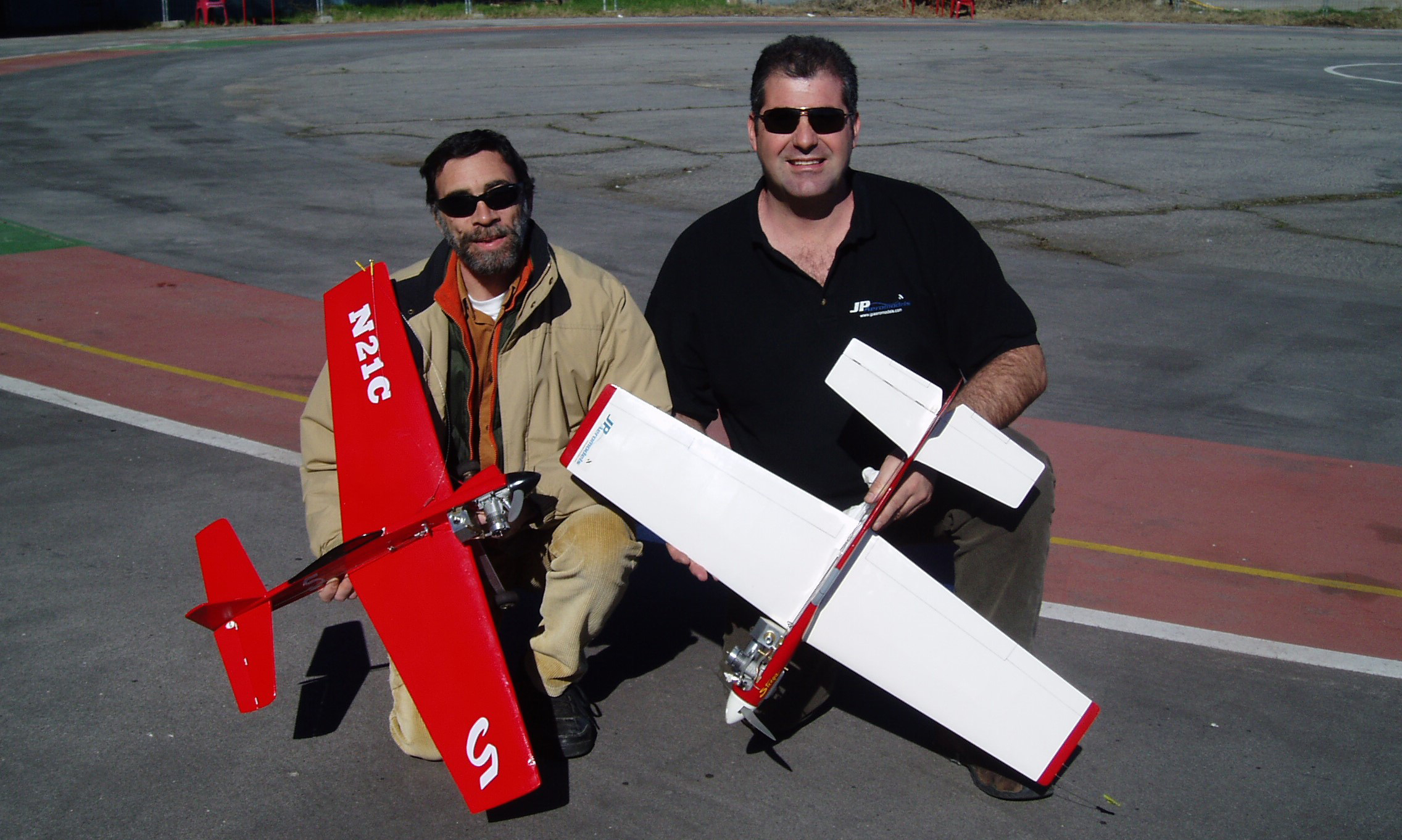
About 20 years ago, Pablo Sáez and I (José Luis Oterino) started exploring electric power systems for Control Line models.
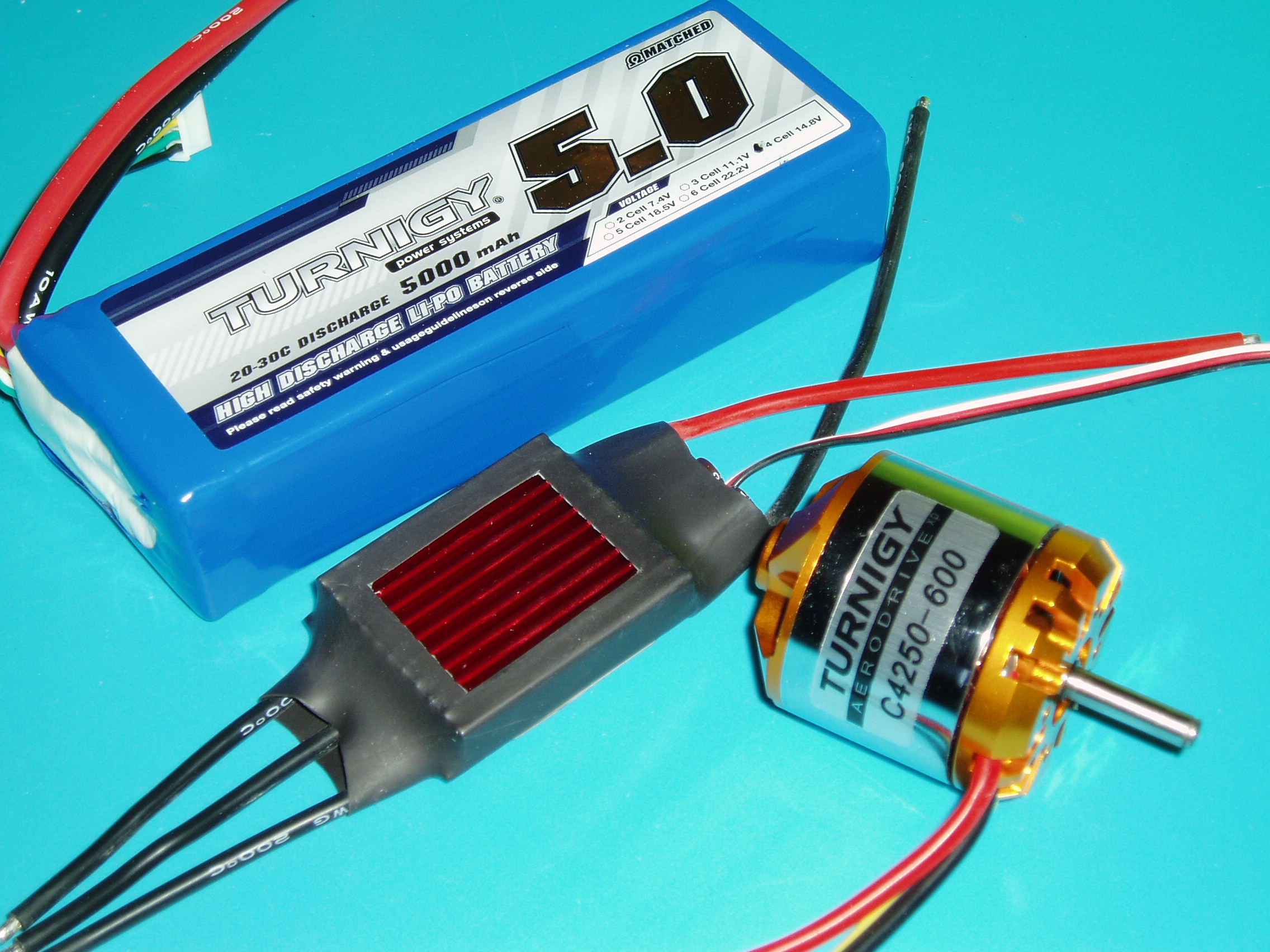
Back then, brushless motors and LiPo batteries were becoming available at affordable prices through Chinese online stores such as Hi-Model and, later on, HobbyKing. We decided to start exploring this path because the numbers, especially in terms of weight, were finally starting to make sense. Those of us who fly Control Line know how critical model weight is. With what was already available on the market, it was finally possible to build a power setup within an acceptable range. It was still heavier than a glow setup, but an effective electric Control Line model was now a realistic option.
We started by converting a .15-size model, a Solito that originally flew with an MVVS .15, which I still keep with that same electric setup...
For throttle control, the first solution was simply an RC transmitter and an onboard receiver. But that was just the beginning: we wanted to go further and build what was possibly the world's first dedicated Control Line timer.
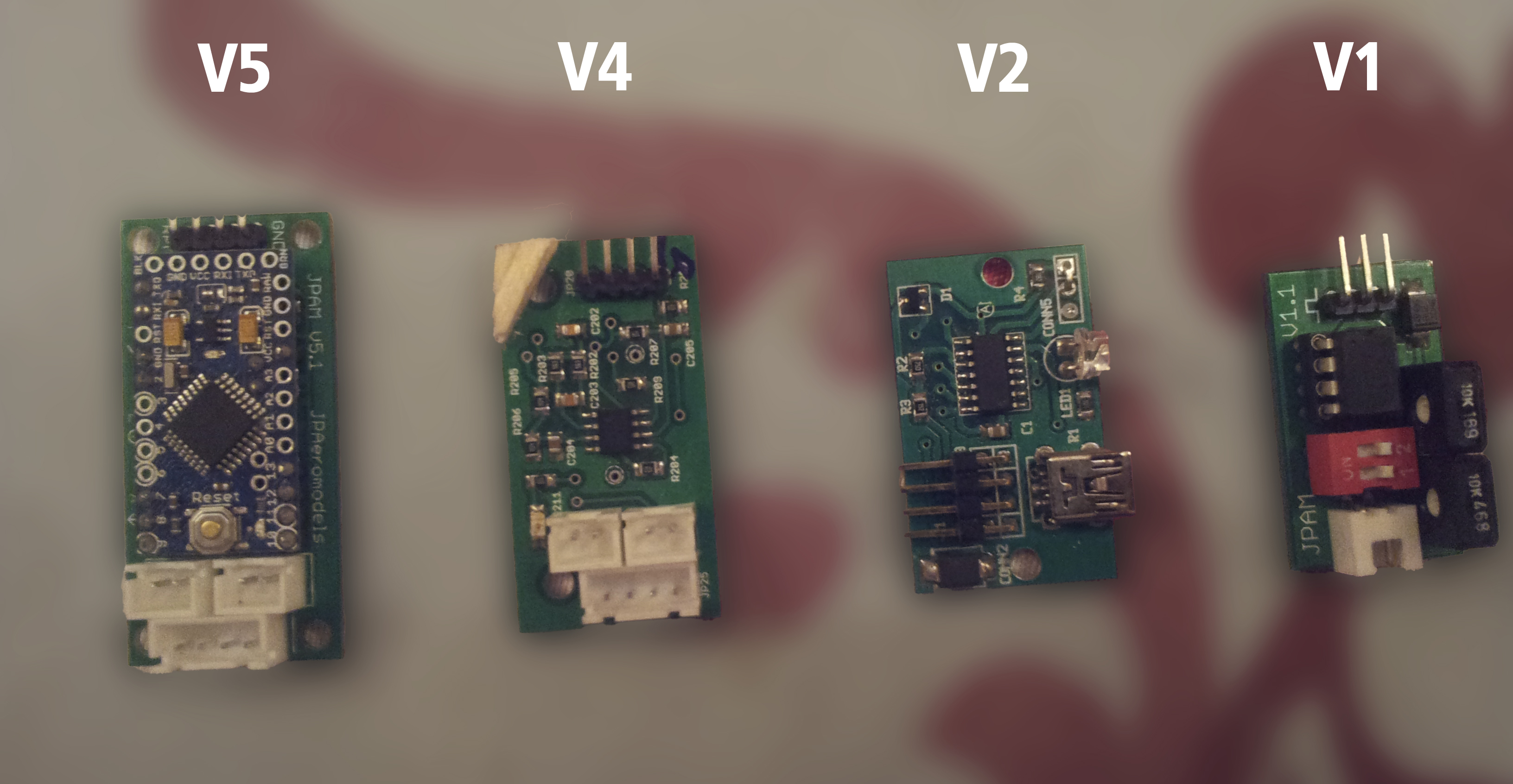
Pablo got to work, and within a few weeks we had the first prototypes, with handmade PCBs designed and built by him. We started the first flight tests, and JPam_v1 was born.
Very quickly, thanks to Pablo's knowledge of electronics and programming, we defined and built several versions as experience guided us. There were also V2 and V3 versions, although they stayed along the way.
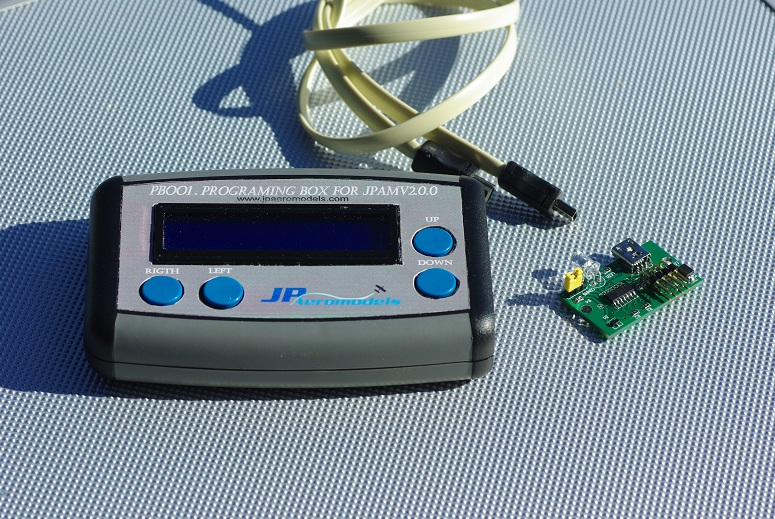
In parallel, to configure and program the Timers, we also developed programming boxes that evolved alongside each new version.
This worked well for basic models, but we still needed better RPM control. That led to JPam_V4, with governor-based RPM control, reading the motor signal and using it for regulation. The need for more precise control was already focused on F2B models.
V4 was a major success. It was the most functional and stable version, it worked very well, and we manufactured hundreds of units.
Even so, we knew we could have more control over speed, especially on windy days. This led us to develop JPam-V5, with active angular velocity control using a 6-axis IMU. In this version, angular velocity is controlled from a pre-programmed RPM set.
For that version, we decided to use an Arduino Mini as the timer base, and Pablo designed and built a PCB to integrate it. This PCB even included a small memory to store a flight log and help with software development.
At that point, Alberto Solera joined the project, creating new firmware for the V5 hardware designed by Pablo Sáez. That is the firmware we still use today.
What is JPam_NEO?
JPam_NEO is the evolution of the JPam timers, using all the know-how acquired over these years and building on the foundation of the original JPam timers, which have given such good results.
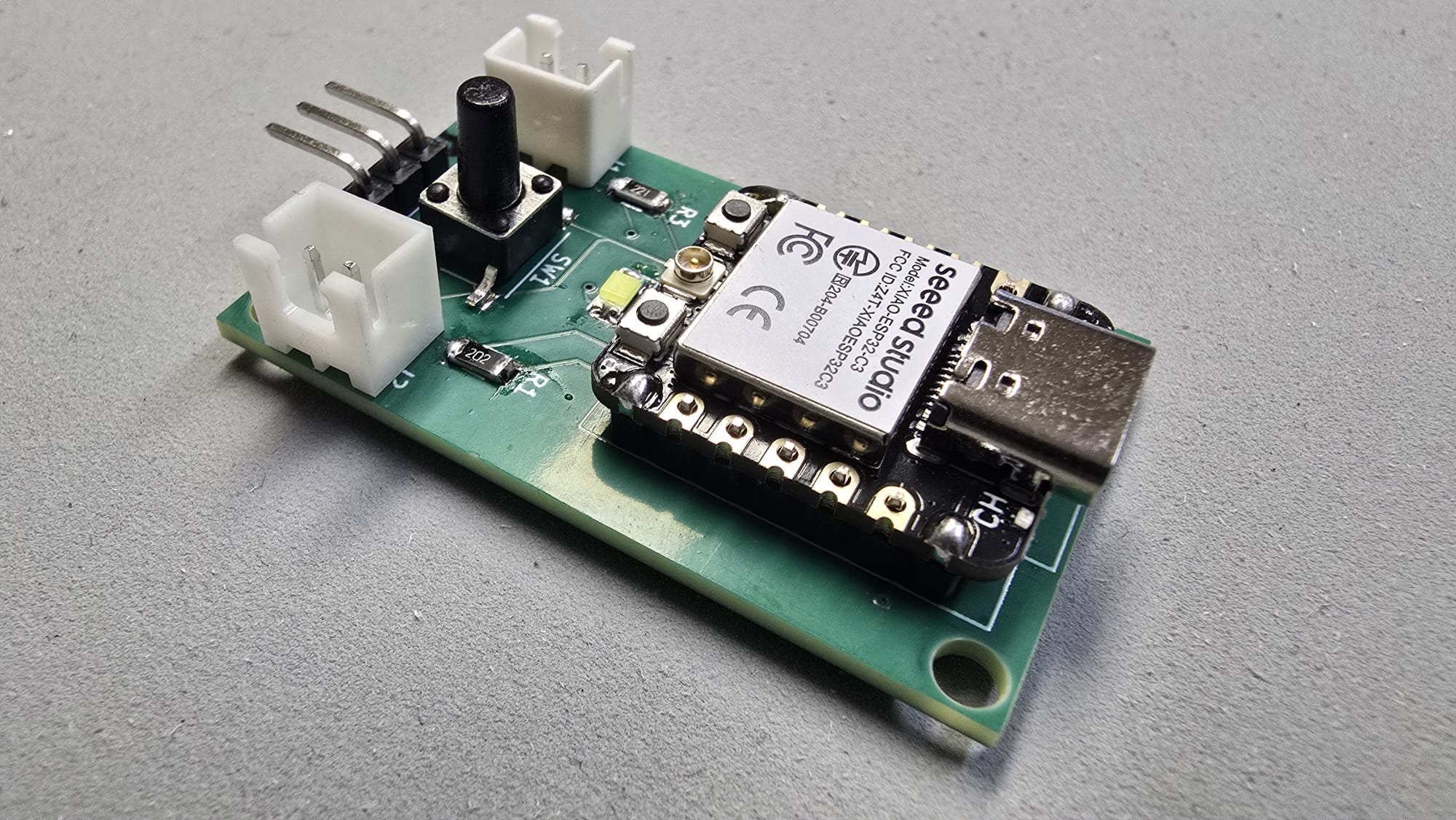
Because my knowledge of electronics and programming is much more limited than that of my friend Pablo Sáez, the driving force behind JPam, I have approached this project in a more pragmatic and accessible way. I am using the Seeed XIAO ESP32 as the hardware base, mainly in the C3 and S3 versions.
You can find all the information about this hardware here: https://wiki.seeedstudio.com/es/SeeedStudio_XIAO_Series_Introduction/
Given this limitation compared with Pablo's knowledge, I decided that the hardware had to be as simple as possible.
JPam_NEO Versions & Compatibility
All JPam_NEO versions can be configured from the mobile app: JPam_NEO App.
The V1 PCB is compatible with the F2G version, currently in validation, and my intention is for it to be compatible with V4 as well. This means that, if you have a V1, you can convert it into an F2G, for example, whenever you want, and then go back again. See how in Update firmware.
JPam_NEO_V1
This is the most basic version of the JPam_NEO Timers.
It can be configured via BLE using the app. WiFi configuration is planned as a future evolution.
Delay: from 0 to 60 s, with 0 s meaning immediate motor start.
Flight power: from 10% to 100% power. It includes a small power management function, reserving 20% to use at the end of the flight and compensate for battery voltage drop in flights that use a large part of the battery capacity.
Flight time: from 10 s to 320 s.
JPam_NEO_V4
Currently under active development.
JPam_NEO_V4 is the general-purpose version with RPM control through a governor. Unlike V1, where the user sets a power percentage, here the user sets target RPM, and the Timer adjusts the motor to try to maintain them during the flight.
This version uses the XIAO ESP32-S3 and requires a DShot-compatible ESC, because RPM measurement is obtained through the ESC signal cable, without external hardware.
To learn more about what DShot is and how it affects ESC selection, visit the ESC page.
It is compatible and usable with JPam_NEO_Telemetry, which started as a diagnostic and validation tool, but in V4 is already part of the planned features for general use.
JPam_NEO_V5
Designed specifically for F2B, in the future. It will be equivalent in features to JPam_V5, with angular velocity control through an IMU and PID.
JPam_NEO_F2G
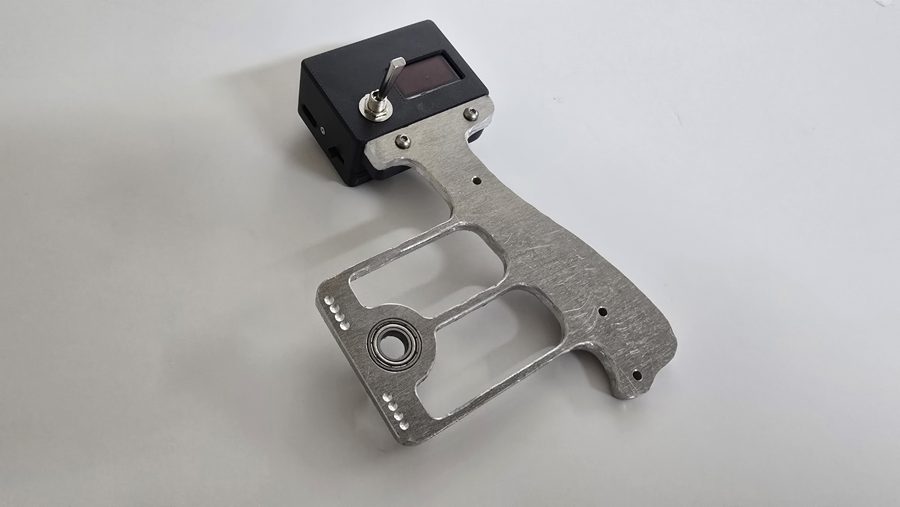
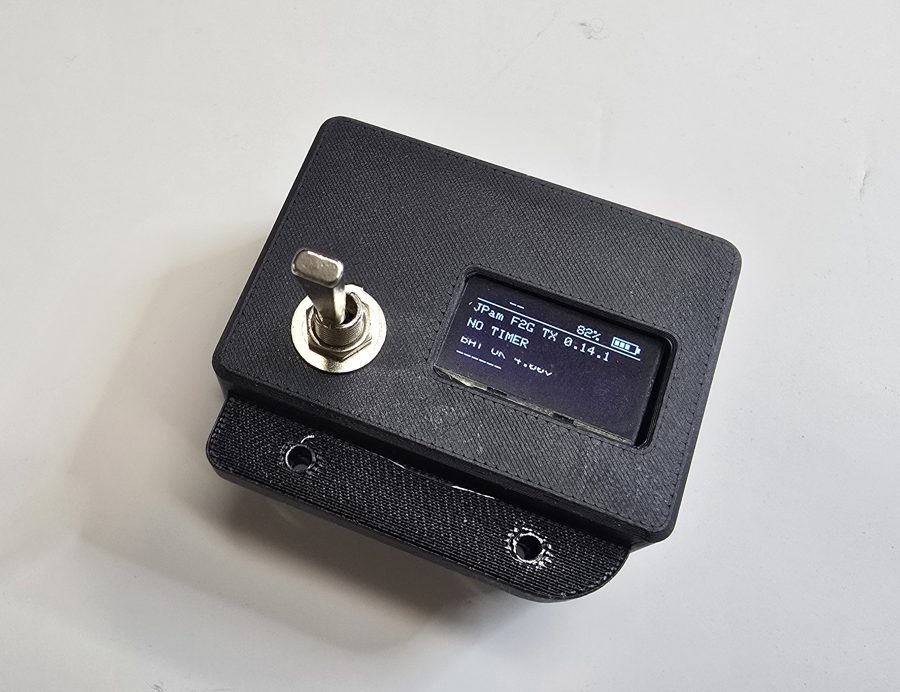
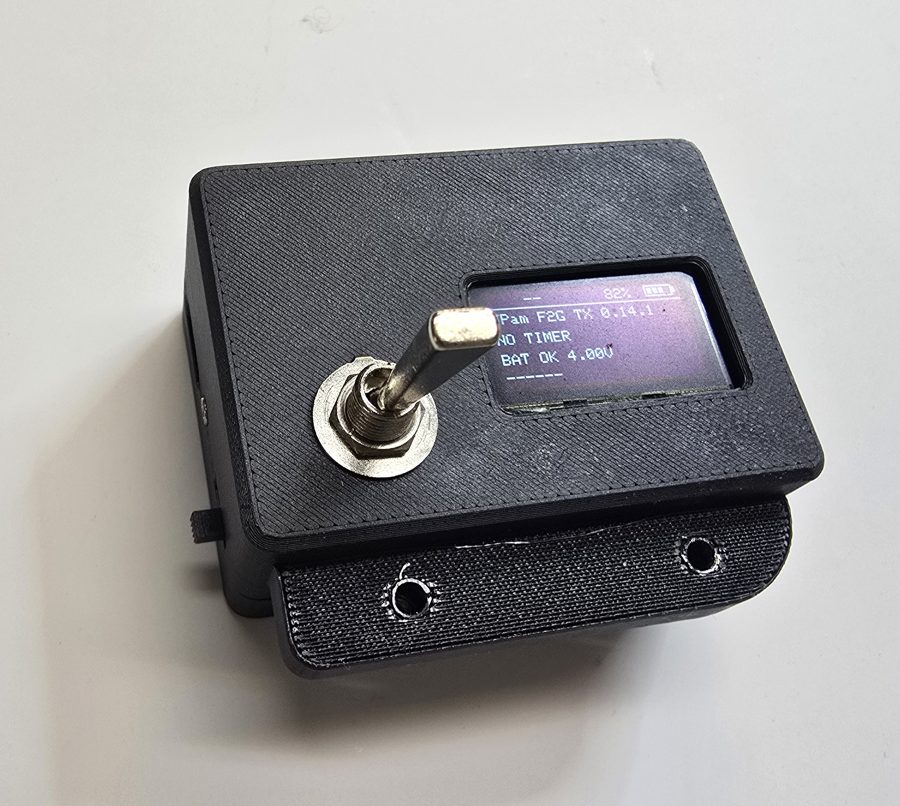
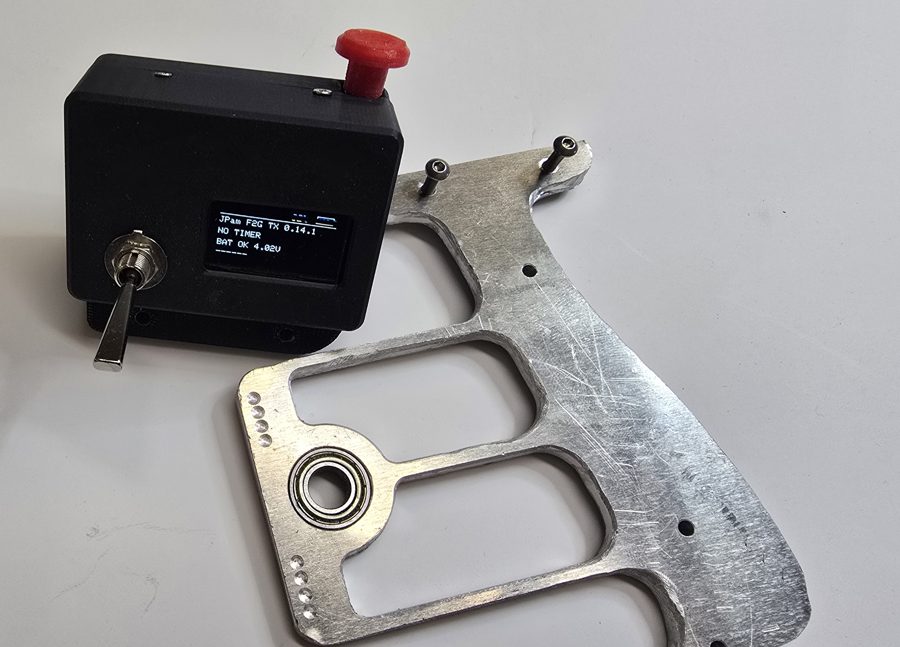
JPam_NEO_F2G is functionally complete and is currently being validated by beta testers.
It is aimed at the F2G speed category. Unlike V1, it works with programmable flight phases: delay, initial acceleration, waiting flight, maximum power and stop.
The basic version uses PWM ESC control and an external TX for the pilot, with two main buttons: START / STOP and MAX POWER / STOP.
The goal is to pre-program acceleration ramps, adjust waiting power and activate final flight power exactly when the pilot needs it.
An advanced version, JPam_NEO_F2G_pro, is planned for later.
JPam_NEO_FF
Designed specifically for Free Flight categories, in the future.
JPam_NEO Telemetry
Telemetry is one of the most important development lines of the JPam_NEO project.
In JPam_NEO_V4, telemetry is already available. It started as a diagnostic and validation tool, because this version needs to read real RPM to work with the governor, but it is kept as a general-purpose tool to analyze flights, compare RPM and better understand Timer behavior.
The long-term idea is for telemetry to grow little by little and become useful in all JPam_NEO Timers that need it: V4, F2G_pro, V5 and future versions. Always keeping diagnostic data clearly separated from motor control commands.
Use the sidebar on the left to navigate through the documentation sections.